

Harvard Pilgrim Health Care: Enhanced Fitness Reimbursement Tool.
Role: Product Design, End-to-End Flow Design, UX Writing
Team: Daniel Dodman (Design Lead), Casey Addy (Design Strategy), Matthew Pugsley (UX Research)
Timeline: 01/2023 - 06/2023
Project Overview
Harvard Pilgrim's fitness reimbursement tool was driving real operational cost: an outdated, confusing flow led to incomplete submissions and pushed volume into the call center.
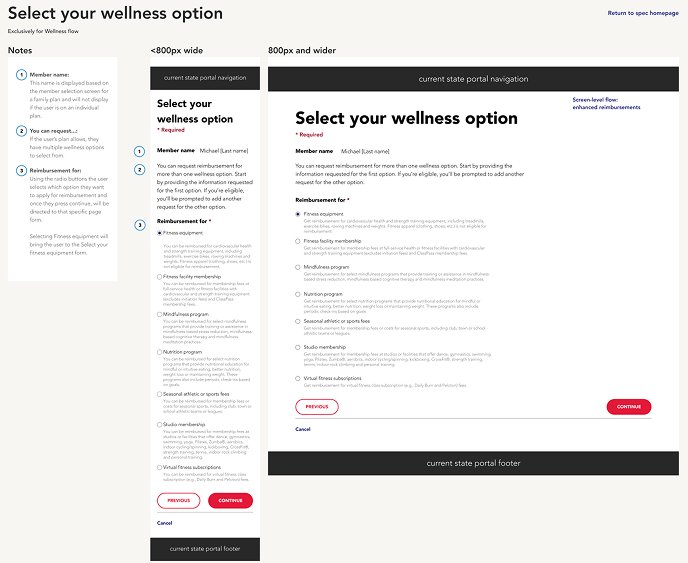
Beyond fixing the existing tool, the team was tasked with launching a new wellness reimbursement pathway, leading to an expansion of what members could claim without expanding the team's design or engineering bandwidth.
I owned the end-to-end redesign of both flows, from journey mapping through UX writing to final UI, building the new wellness pathway on shared components so it could ship without a second design system.
The Challenge.
Users faced several challenges with the original tool:
Complex, unclear process: Multiple steps and confusing instructions caused errors and delays.
Limited benefit accessibility: Only traditional fitness activities were supported.
Inconsistent feedback messaging: Errors and warnings were vague, leaving users unsure how to correct issues.
Cognitive overload: Poor content structure and unclear visual hierarchy increased frustration.
Objective: Create a simpler, more intuitive tool that supports both fitness and wellness reimbursement, while maintaining accessibility and consistent UI patterns.
My Role.
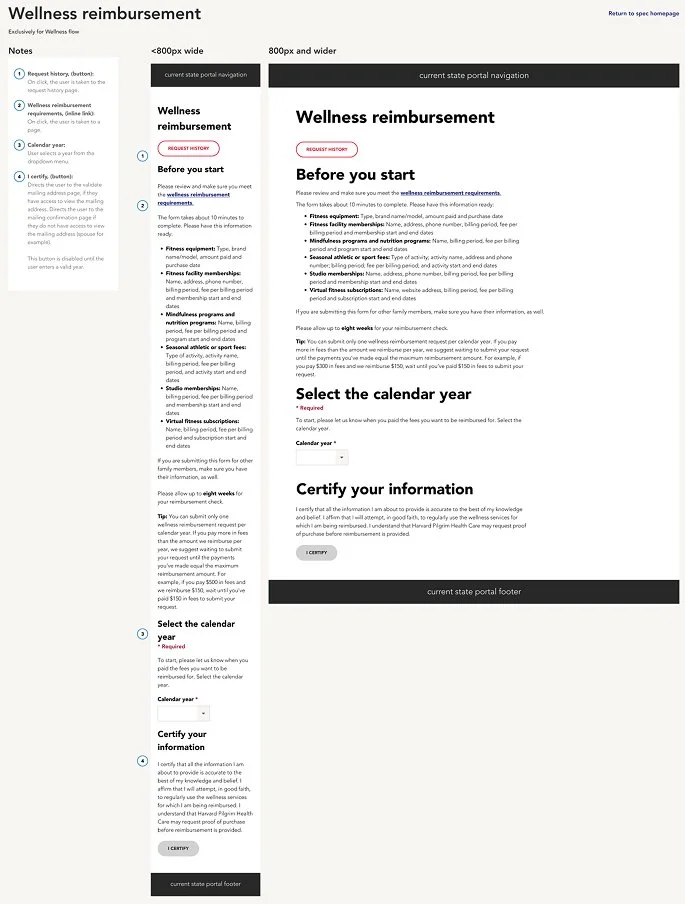
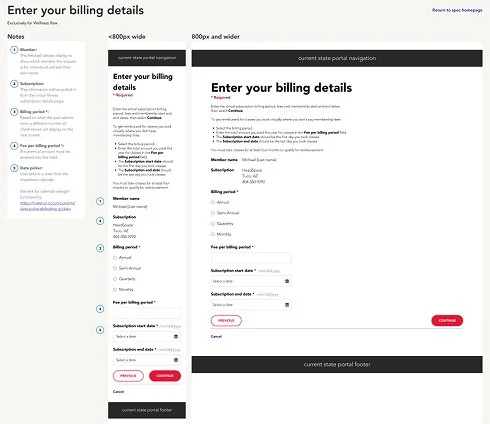
Redesigned user journeys and screen flows for both fitness and wellness reimbursement.
Refined information architecture and content strategy for clarity and cognitive ease.
Rewrote UX copy for errors, warnings, and confirmations with plain, supportive language.
Utilized the brand new unified design system custom iconography to visually differentiate feedback states.
Applied accessible, modular UI components to ensure consistency and usability across both flows.
Process & Approach.
Research & Discovery
Conducted content audits to identify pain points.
Collaborated with stakeholders to clarify eligibility rules and requirements.
Mapped existing user journeys to identify friction points and bottlenecks.
Ideation & Flow Design
Developed streamlined, linear flows for fitness and wellness reimbursement.
Used progressive disclosure to reduce cognitive load.
Designed mirrored modular paths to maximize reuse of components while addressing unique wellness needs.
UX Writing & Visual Design
Rewrote feedback messages for clarity and reassurance.
Created custom icons to improve comprehension of warnings, errors, and confirmations.
Optimized visual hierarchy of forms, modals, tables, and data inputs to guide user attention.
Implementation & Iteration
Tested flows with internal stakeholders to refine usability.
Ensured all designs adhered to accessibility standards and responsive best practices.
The Tradeoff.
Building two fully custom flows for fitness and wellness reimbursement would have doubled design and engineering effort.
I designed the wellness pathway as a mirrored, modular structure that reused most of the fitness flow's components while trading some flow-specific customization for a faster build and a single set of patterns to maintain going forward.
Impact & Results.
Simplified the fitness reimbursement journey: testing sessions showed submission time drop by roughly half, with a corresponding increase in task completion rate
Reduced reimbursement-related call center inquiries by an estimated 30%, based on self-service adoption following the redesign
Launched a new wellness reimbursement pathway on shared modular components, expanding benefit access (mindfulness, online coaching) without adding a second design system to maintain
Delivered a modular, accessible UI supporting both flows within one cohesive pattern set
Reflection.
This project reinforced the importance of designing for clarity in complex, policy-driven systems.
Collaborative research and stakeholder engagement were crucial to balancing user needs with regulatory requirements.
Thoughtful UX writing, iconography, and information hierarchy can significantly reduce user anxiety and improve completion rates.
Future iterations could further optimize content strategy and explore more personalized guidance for users with varying wellness goals.