

Point32Health: Directional Design & Navigation Optimization.
Role: Product Design, Visual Design & Development
Team: Daniel Dodman (Design Lead), Casey Addy (Design Strategy), Matthew Pugsley (UX Research)
Timeline: 01/2023 - 06/2024
Project Overview
After Harvard Pilgrim Health Care and Tufts Health Plan merged into Point32Health, the company was running two disconnected digital experiences: duplicating maintenance costs and confusing members who now had to navigate two separate portal systems.
Leadership needed a single, unified experience that could launch on a compliance-driven timeline, without a corresponding increase in engineering headcount.
I led the visual design and implementation of the unified navigation system, working alongside design strategy and UX research to translate merger-driven complexity into one coherent product.
The Challenge.
Point32Health faced several usability challenges:
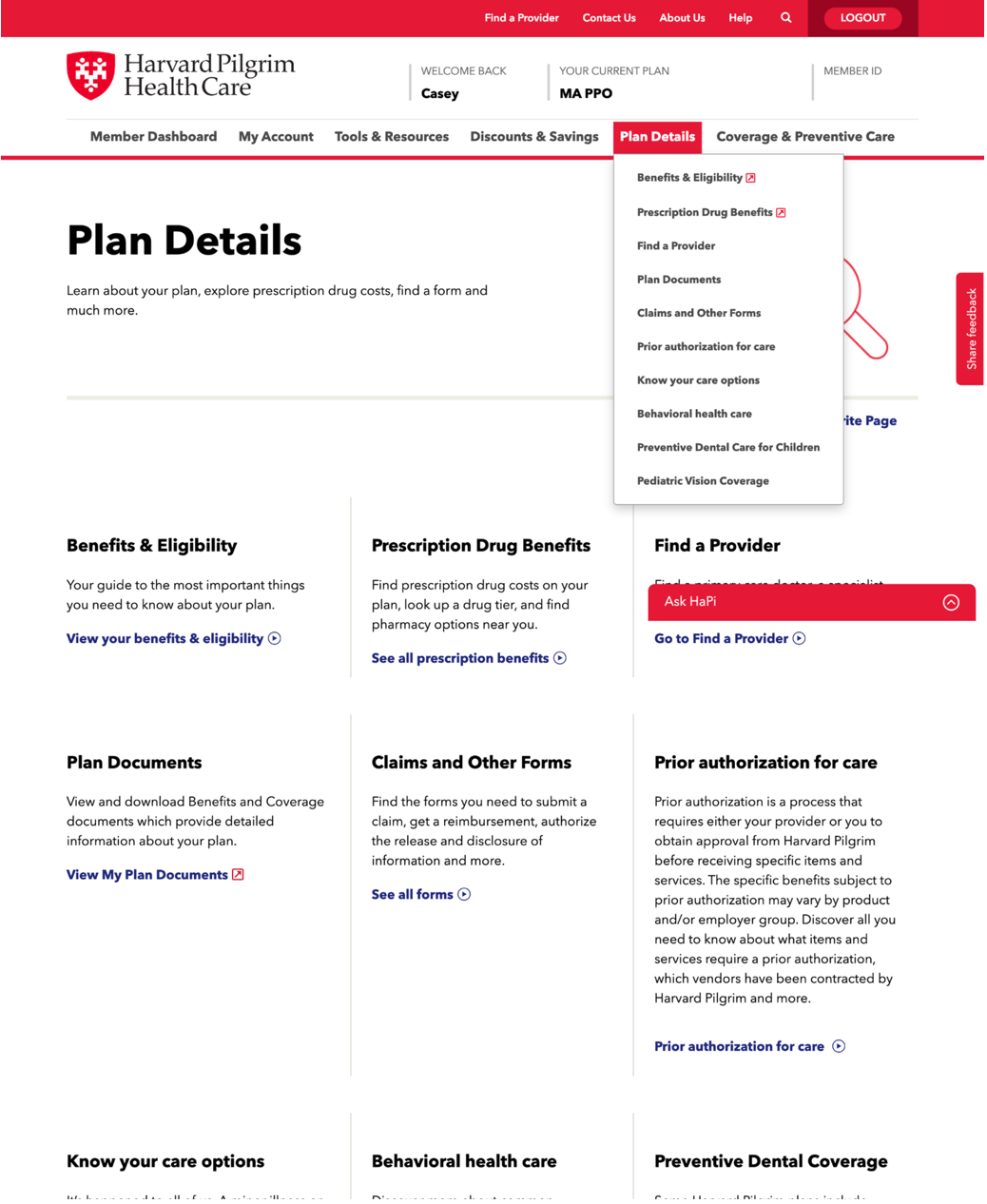
Complex portals: Multiple entry points and inconsistent navigation frustrated users.
Low engagement: Users struggled to find critical information, decreasing satisfaction and task completion.
Accessibility gaps: Inconsistent design patterns limited inclusivity.
Regulatory constraints: Health care compliance created design limitations.
Objective: Simplify navigation, improve content discoverability, and align the member portal with the public website.
My Role & Contributions.
Designed and implemented visual solutions supporting UX research insights
Simultaneously aided in this ongoing project and designed, developed, implemented the unified design system
Applied unified design system components to maintain consistency
Collaborated with cross-functional teams to resolve terminology inconsistencies and accessibility challenges
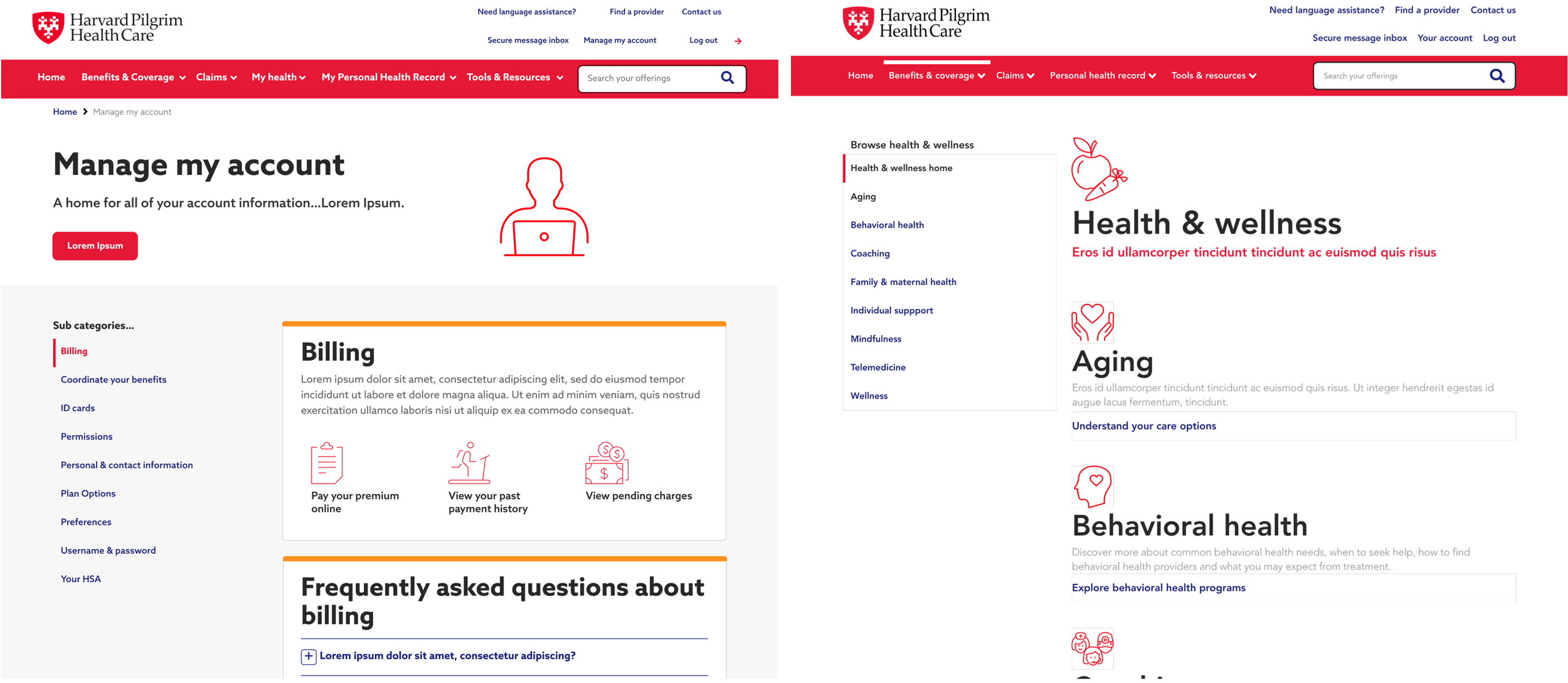
Advocated for directional design patterns that improved wayfinding and task completion
Process & Approach.
Discovery
Analyzed site analytics to identify high-friction areas
Conducted competitive benchmarking to align with industry standards
Collaborated with UX research on card sorting and tree testing
Ideation
Mapped navigation flows based on user behavior and research
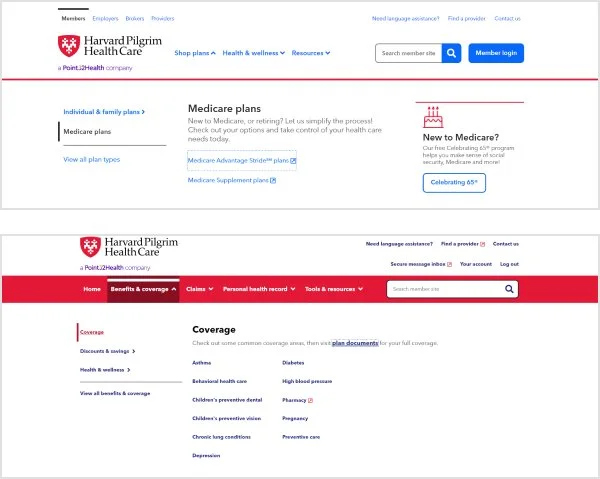
Proposed design patterns to improve clarity, scanability, and accessibility
Implementation
Applied the unified design system for visual and functional consistency
Iterated on design solutions with stakeholder feedback and usability testing
Navigated organizational and regulatory constraints by prioritizing accessibility improvements and mobile usability: areas where we could drive clear, measurable impact within existing limitations.
The Tradeoff.
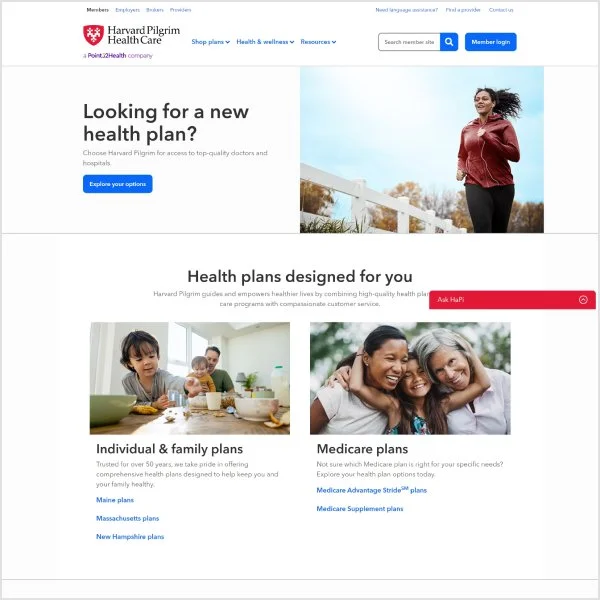
Full parity between the member portal and public site wasn't feasible inside the compliance timeline.
I advocated for prioritizing accessibility compliance and mobile usability first: the two areas where we had clear regulatory exposure and the most measurable user impact, and pushed hub navigation refinement and content optimization to a second phase.
That sequencing is what let the project ship on time without compromising on the requirements that carried real risk.
Impact & Results.
60% improvement in member portal navigation usability
Contributed to gains in user satisfaction and task completion, tracked via CSAT and drop-off metrics post-launch
Unified two previously separate portal systems into one design-system-driven experience, cutting future design and dev maintenance overhead
Shipped inside the compliance-mandated timeline by sequencing accessibility and mobile fixes ahead of lower-risk refinements
Reflection.
This project reinforced the importance of designing for clarity in complex systems. Collaboration with UX research and design strategy was key to creating a usable, accessible experience under regulatory and organizational constraints. Moving forward, I would continue to iterate on navigation refinements and expand content optimization to further enhance user outcomes.